July 5 – July 23
During summer 2024, several members of the University of Northern Colorado Brazilian Jiu-Jitsu club traveled to Thailand for a few weeks to see the sights, meet various martial artists, and immerse themselves in the culture. The trip had been planned for months, and everyone was excited to finally embark on this adventure. Thailand is 13 hours ahead of Denver, and when combined with 26 total hours of travel time, the journey from Colorado to Thailand takes nearly two full days. Departing Denver at 6:00 a.m. put us in Bangkok at about 10:00 p.m. the following calendar day (40 hours later, accounting for the time change). The first leg of our trip took us from Denver, Colorado (DIA) to San Francisco, California (SFO) via United Airlines. At two hours and 40 minutes long, the flight to San Francisco was brief and pleasant. Additionally, the early morning flight was nearly empty so many of us got entire rows of seats to ourselves (the discount traveler’s first class). The SFO airport is bustling in the morning and we passed by numerous shops and restaurants on our walk across the airport to our next departure gate. Using one of our member’s Chase Sapphire Reserve credit card, we received complimentary Priority Pass access, allowing us to use the various airline lounges at the various airports on our trip. Additionally, with the mileage signup bonus from the Chase Sapphire Reserve, one of our member’s flights was nearly free and they paid just $64.40 in taxes for a roundtrip ticket from Denver to Bangkok. Learn more about the Sapphire Reserve credit card and get the signup bonus here.
While at SFO, we had a 3 hour layover so we walked over to check out both the Golden Gate Lounge and the China Airlines Lounge. Visiting the Golden Gate Lounge at SFO was a pleasant experience. The décor was elegant, the seating comfortable, and the selection of refreshments was impressive. I enjoyed the runway views while sipping my coffee and sampling the variety of breakfast foods. Moving to the China Airlines Lounge, I found it equally impressive. It was less busy and more spacious, but the food selection wasn’t as good. The lounge had a modern design with an Asian theme. Between the two, it was more comfortable in the China Airlines lounge, but a hungry traveler would be better off with the buffet line at the Golden Gate Lounge.
Since we started our travel at 6:00 a.m. from Denver, the layover in San Francisco was longer this year. However we felt it would be more prudent to have a longer layover that gave us ample time to make our connecting international flight rather than cut things close and risk being in a rush. After 3 hours at SFO, we headed down to the United Airlines international gates. The next flight was the longest of the journey: 11 hours and 40 minutes from SFO to Kansai International Airport in Osaka, Japan (KIX).
The flight to Japan was relatively comfortable on one of United Airline’s Boeing 777-300ER planes (seat map). Tickets have since gotten cheaper since our trip and we’re regularly checking Google Flights to see if any deals come up for our next trip to Thailand in summer 2025 (June 2025 prices). After two full onboard meals, a mid-flight snack service, a bunch of Benadryl (to sleep), and most of season 4 of the Boys on Amazon Prime, we touched down in Osaka, Japan.
We had a two and a half hour layover in Japan so we headed to the Priority Pass lounges we could access in KIX. Osaka has five different Priority Pass accessible lounges and one restaurant that we could go to, so that was nice.
Next, it was time for the last leg of our trip from Osaka to Bangkok: a 5 hour and 50 minute flight on Star Alliance partner Thai Airways. As we settled into our seats, we were immediately impressed with the comfort and amenities offered on the Thai Airways flight. Luckily, we had been upgraded to premium economy seats which were both near the front of the aircraft and provided us with additional legroom. Moreover, we also had entire rows of seats to ourselves once again.
The flight went by quickly and I woke up just in time for landing at Suvarnabhumi International Airport (BKK) in Bangkok, Thailand. Our flight arrived just before 10:00 p.m., but it hardly felt like late evening with all of the passengers moving about the airport. After getting off the plane, there was about 10 minutes of walking from one of the outer gates to the central part of the terminal.


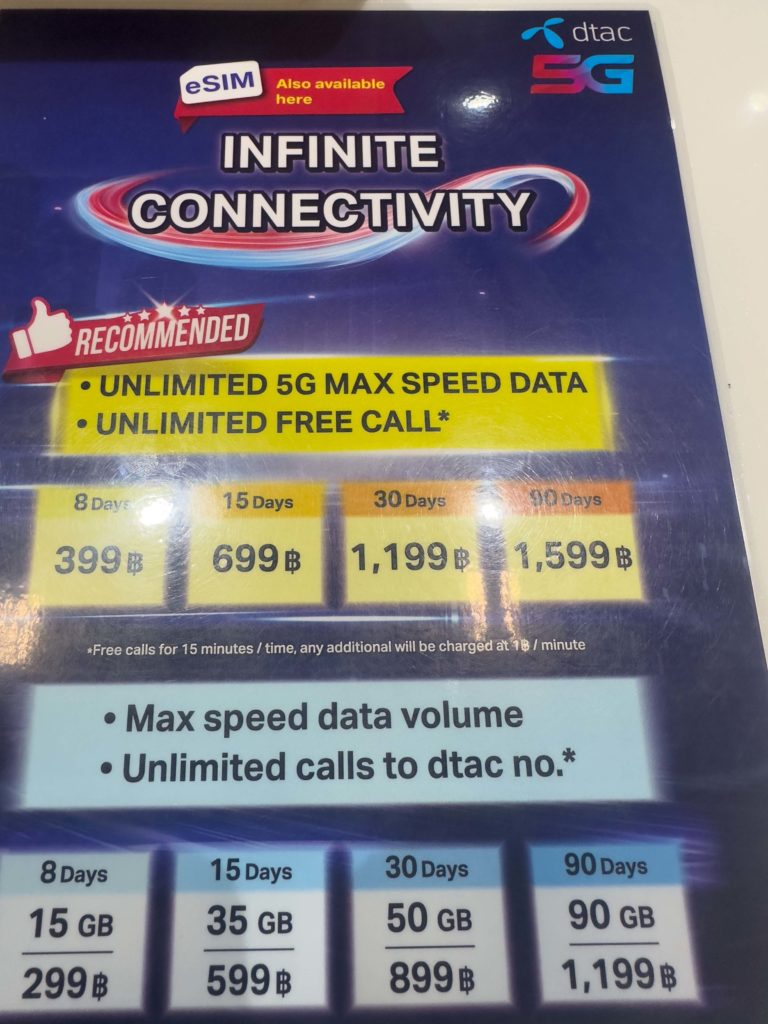
After a few minutes in the immigration lanes, we found ourselves in the baggage claim area. Our luggage arrived quickly as it looked like most people on the flight didn’t bother to check any luggage. We grabbed our luggage and quickly headed out of the arrivals area. But not before purchasing an eSim card for our stay in Thailand. I purchased an unlimited 5G data plan from DTAC, which only cost 1,599 baht (about $44) for up to 90 days. As long as you have an unlocked smartphone, the major mobile phone providers can install a Thai sim card for you, giving you access to voice, text, and/or data in packages of 3, 7, 15, or 30 days.

A taxi from the airport to the heart of Bangkok ran us a total of 420 baht ($11.67). The metered rate in the taxi itself was 280 baht, but there’s also a 50 baht airport fee. The driver added on a luggage charge of 20 baht and I told him to take the toll highway for an additional 70 baht. When taking taxis / private vehicles in Thailand, the passenger is responsible for paying the toll on applicable highways and roads. You just hand the driver the money, they’ll give it to the toll booth and give you back your change and a receipt. We decided to stay at the Ambassador Hotel again; a convenient hotel on Sukhumvit Soi 11, right in the heart of the tourist area, and a short walk from the Nana BTS station. It was about 11:30 p.m. on a Friday night by the time we got to our hotel room so we decided to get some rest.



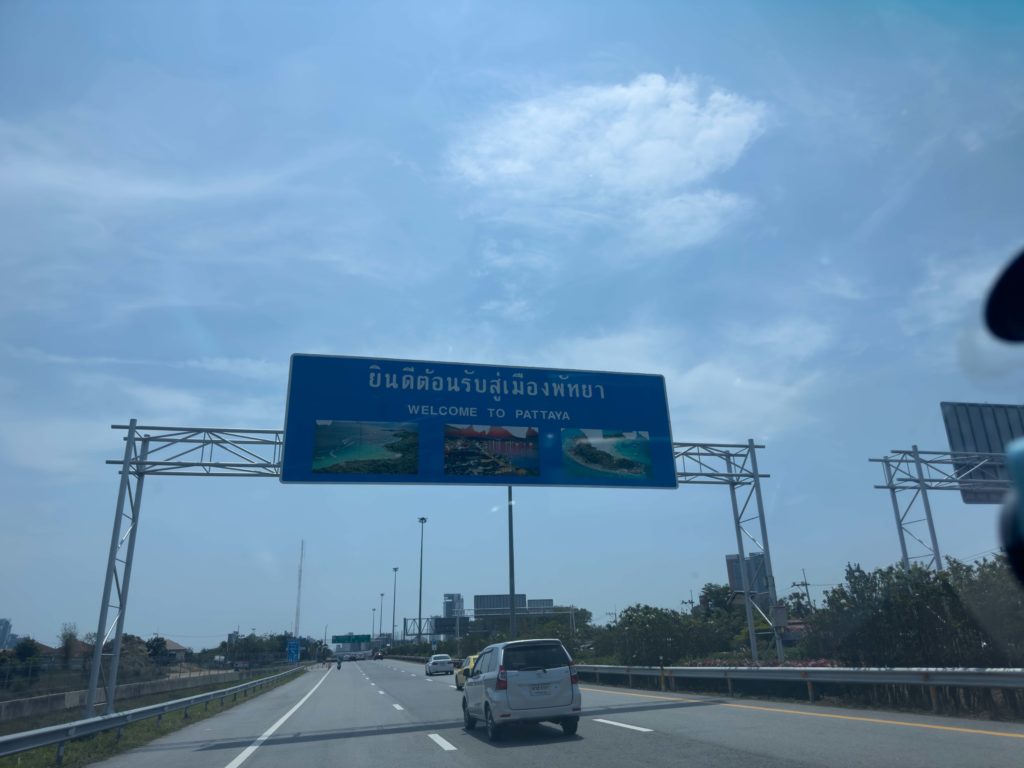
Saturday was our first full day in Thailand and we had no time to waste. We jumped on the BTS from Nana to Siam and headed into the Siam Center mall. There’s actually a bunch of huge malls all around the Siam BTS station, but Siam Center is a little quieter and less busy than Siam Paragon or MBK Center. First stop of the day was Shabushi for some all you can eat hot pot, sushi, and tempura; a deal at just 437 baht ($12.14). After lunch we jumped into a Bolt car and headed to the Chatuchak Weekend Market. Since we arrived late at night, we had to head to Pattaya another day on the bus from the Ekkamai Bus Terminal. There’s hourly service to and from Pattaya from Ekkamai, Bangna, and Suvarnabhumi Airport (BKK), but Ekkamai is the closest bus terminal to the main tourist areas of Bangkok. At only 131 baht per person (about $4) it’s just about the cheapest option to get from Bangkok to Pattaya. Traffic was light so it only took about 2 hours to get to our destination. The bus is well air conditioned and pretty comfortable. Not a luxury coach by any means, but hard to beat at $4 per person. https://youtu.be/bTbyPkh8uEo?si=IdeKWbr7XdmZgwyP We arrived in Pattaya at about 2:30 p.m. on a Friday so things were still relatively calm by Pattaya standards. Once we arrived at the North Pattaya Bus Terminal, I called us a Bolt vehicle which took us to the P Plus Hotel, just off of Soi Buakhao. We booked hotel rooms for our stay through Agoda.com and were able to get each room at about $21.00 USD per night. Compared to the hotel we stayed at last year (the Sawasdee Siam), I think the P Plus Hotel was a better overall hotel. Being off of Soi Buakhao resulted in a quieter stay and the rooms at the P Plus Hotel were spacious and well-appointed. Additionally, the hotel had a restaurant, decent room service, a pool, and a nice gym. I even ran into a pretty famous One FC / UFC fighter staying there too. One additional advantage of this hotel was that they didn’t require a credit card or cash deposit to check in. Many hotels in Thailand will require you to either give them a credit card number or leave a cash deposit (I’ve seen anywhere from 100 to 1,500 baht) for security.
After checking in and dropping off our luggage, we decided to take a walk down the street to exchange some money. Having only a handful of Thai baht from the last trip, we needed to reload before heading out on the town. I remembered to tell everyone to only bring mint-condition, large denomination bills from back home. The larger bills get a better exchange rate than smaller bills and money changers won’t accept any bills that have marks, tears, or blemishes of any sort. Prior to leaving the USA, we also all opened online checking accounts with Charles Schwab so that we would be able to use Schwab’s ATM cards throughout Thailand. These cards allow you to withdraw money from any ATM in Thailand and the 220 baht (~$6.00 USD) transaction fee gets refunded to you at the end of the month. From ATM machines, the exchange rate was roughly 35.6 to 35.8 baht to the dollar in July 2024. However, if exchanging $100 bills in cash at TT Currency Exchange, you could get about 36.4 baht to the dollar. We essentially copied our day of arrival from last year’s Thailand trip and headed straight to Hwangjae Barber Shop on Third Road (map). Hwangjae is what you can call a “Vietnamese-style” barber shop or “pampering salon” where they don’t actually cut hair. Upon entering, you’re given a cold glass of water while one of the attendants takes your shoes / socks and other belongings and puts them into a locker. You’re then taken upstairs where one of the staff washes your feet and seats you in a large recliner chair where you’re treated to 90 minutes treatment that includes a straight-razor shave, facial massage and mask, manicure, pedicure, ear cleaning, massage, and hair wash. Total price for the 90-minute treatment was just 700 baht (~$21.00 USD) + 100 baht tip (~$3.00 USD) per person. If you’re curious about the type of services offered at Hwangje, just check out the following video:
By the time we left Hwangje, it was already dark. We walked south along Third Road to Central Pattaya Road and then towards Second Road (route map). Once on Second Road I knew we could catch a northbound songthaew or “baht bus” to get us to our next destination. https://youtu.be/uQwhnUp1Ccw?si=TZacVkIyNbOAeIbk The songthaew is a common form of public transportation in Thailand. It’s just a pick-up truck with benches in the back and a roof over the bed. (~$0.30 USD) per trip. Once on Second Road, we flagged down a songthaew, hopped in the back and enjoyed the cool breeze as we made our way north. The songthaew slowly filled with people with some passengers standing on the rear bumper, holding onto rails as the driver weaved in and out of traffic. The wind blew through our hair, carrying with it the smells of street food and diesel exhaust fumes. As we neared our destination, I reached up to push a signal button which rang a car alarm siren in the truck bed. The driver pulled over immediately, we hopped out, each paid our 10 baht and found ourselves next to Terminal 21 (map). There are a number of large shopping malls of Pattaya, and Terminal 21 was our first stop. As we walked into Terminal 21, the first thing we noticed was the incredible attention to detail in the airport-inspired decor. The entrance was designed to look like an airport terminal and the floors were divided into different levels representing different cities around the world, from Tokyo to Paris to San Francisco. The shops and restaurants on each level were decorated to match the theme, with everything from giant sushi sculptures to miniature Golden Gates.
Unlike many of the tourists in Pattaya, shopping wasn’t really our thing, but all-you-can-eat hotpot definitely was. We headed to the top floor of Terminal 21 to one of our favorite restaurants, Shabushi for dinner. Shabushi is a “kaiten” style hot pot restaurant. Kaiten refers to a conveyor belt that winds its way through the restaurant, bringing dishes of raw veggies and meats right to your table. At our seating area, each of us had a hot pot full of boiling soup broth in front of us as well as an assortment of dipping sauces. We pulled the raw items from the conveyor belt and threw them into the broth to be cooked. The buffet also featured, an assortment of sushi, shrimp and vegetable tempura, potstickers, Japanese curry rice, fresh fruits, ice cream, and soft drinks. The following video wasn’t of us, but you’ll get a good idea of what Shabushi has to offer by watching. A great deal at around 400 baht ($12.00 per person).
Following dinner and a brief walk around Terminal 21, we jumped onto another baht bus in front of Terminal 21 and headed south on Beach Road. In Pattaya, Thailand, the layout of Beach Road, Second Road, and Third Road forms a set of parallel thoroughfares, each with its distinct characteristics and purposes: Beach Road: This road runs alongside Pattaya Beach, the city’s main beachfront. It’s a bustling street known for its scenic views of the Gulf of Thailand. Beach Road is lined with a variety of hotels, restaurants, bars, and shops, catering largely to tourists. The road is also famous for its vibrant nightlife and is often busy with pedestrians, making it a central hub of activity in Pattaya. Second Road: Positioned roughly parallel to and a short distance inland from Beach Road, Second Road serves as a major arterial road through Pattaya. It’s known for its high concentration of hotels, shopping malls, entertainment venues, and eateries. Second Road also features various night markets and is a popular route for local transportation, including songthaews (shared taxis). Third Road: Further inland, Third Road runs parallel to both Beach Road and Second Road. It’s generally less tourist-oriented and more frequented by locals. Third Road is characterized by a mix of residential areas, local businesses, and service industries. It’s often used as an alternative route to avoid the busier tourist-centric areas and offers a more authentic glimpse of daily life in Pattaya. We took the baht bus as far south as we could, but since it was evening, we had to get out at the corner of Beach Road and South Pattaya Road, putting us right at the start of Walking Street.
Pattaya’s Walking Street is a renowned and vibrant part of Pattaya City in Thailand, known for its bustling nightlife. This pedestrian-only street comes alive after dark and stretches about one kilometer from the south end of Beach Road to the Bali Hai Pier. The street is a hub of entertainment and is famous for its neon-lit landscape, consisting of nightclubs, bars, restaurants, and go-go bars. It’s a popular destination for tourists seeking nightlife activities, with a wide array of live music venues, street performances, and international cuisine options. Walking Street reflects the lively and often extravagant nightlife scene that Pattaya is famous for. After heading down Walking Street for a look around, we decided it was a long day and headed back to the hotel to get some rest.
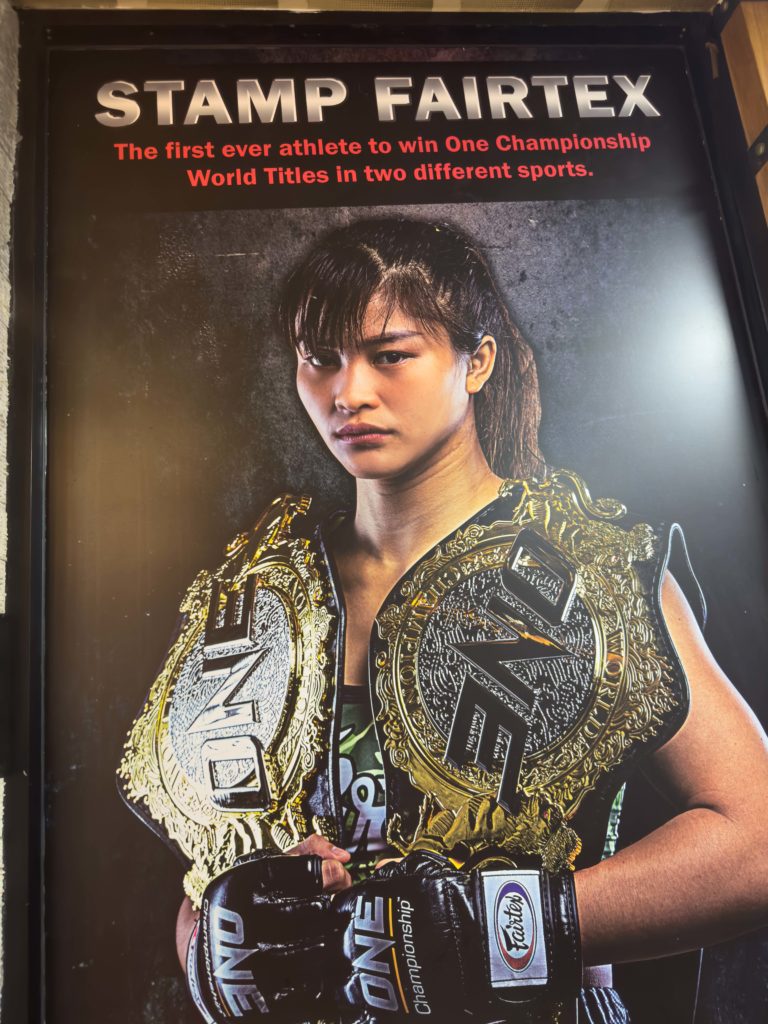
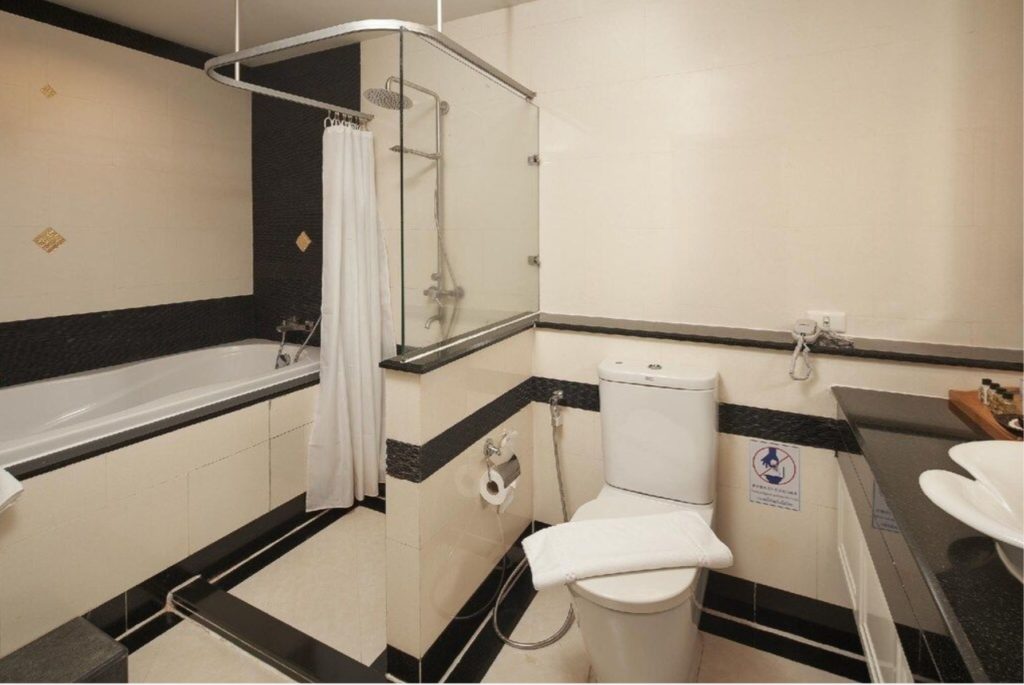
The majority of this trip was spent in Pattaya, Thailand where the headquarters of Fairtex is located. The Fairtex Hotel in Pattaya, Thailand is located near the corner of North Pattaya Road and Second Road, just across the Street from Terminal 21. The facility offers a unique combination of 4-star accommodations and combat sports facilities. It’s well-known for its fitness amenities, including a huge Muay Thai gym, Brazilian Jiu-Jitsu room, weight room, strength & conditioning area, and a large outdoor swimming pool. https://youtu.be/dxQAYSj2Oi8?si=RQzN71Jom6Y4vEx1


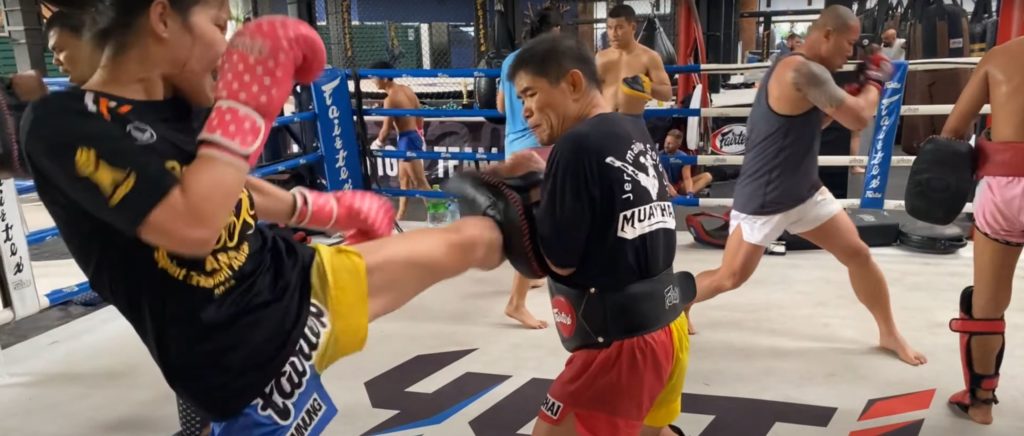
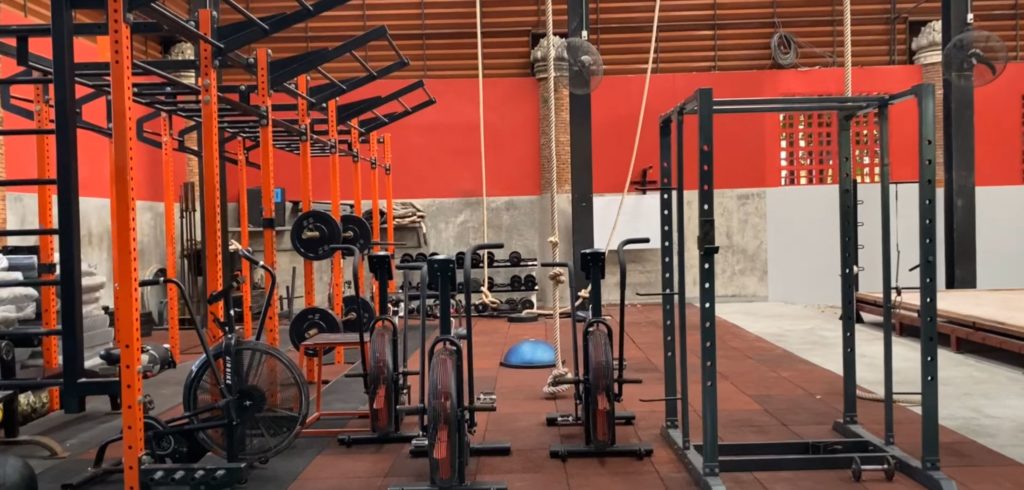


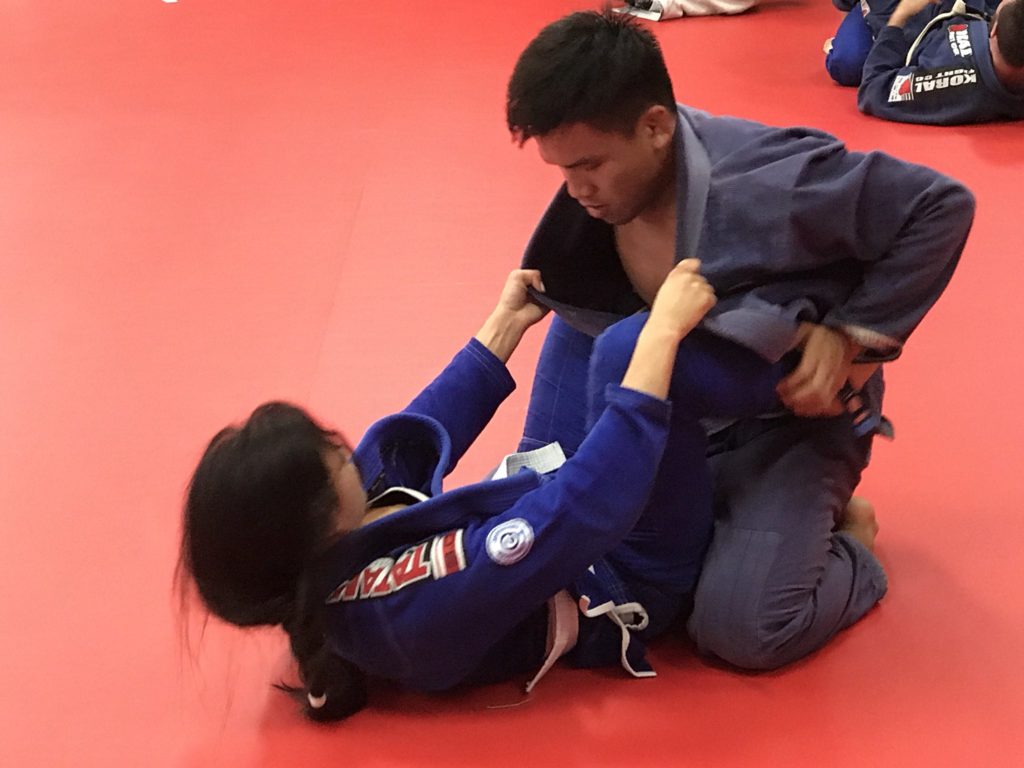

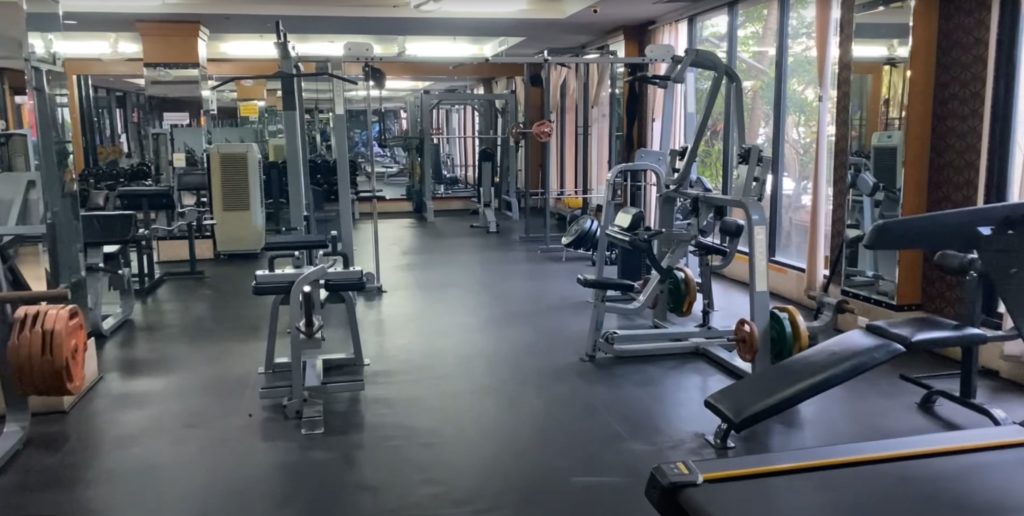

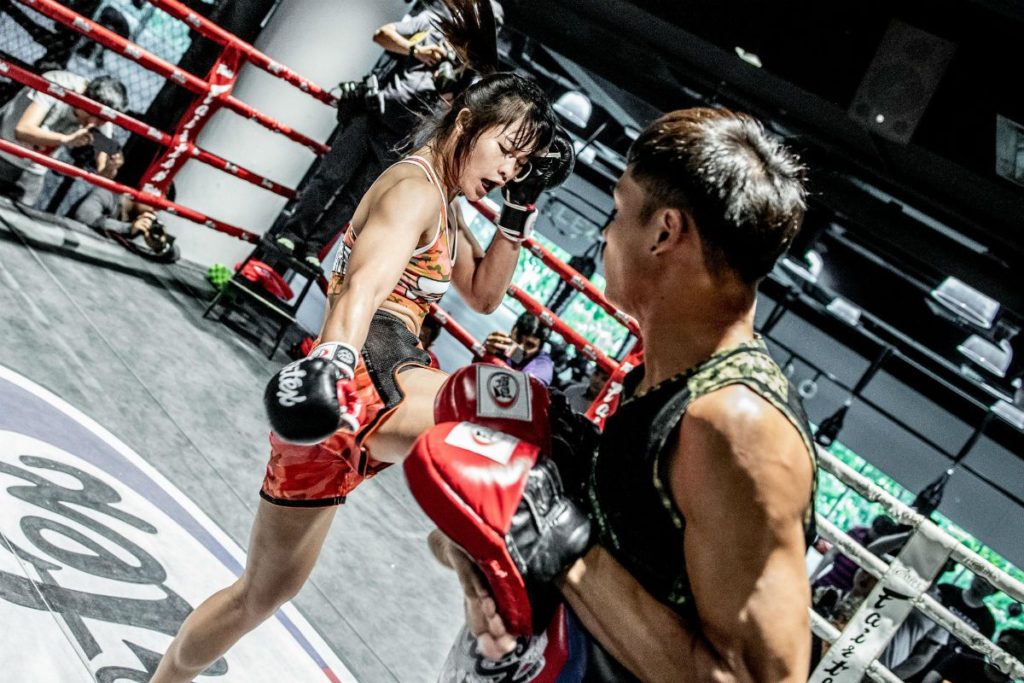
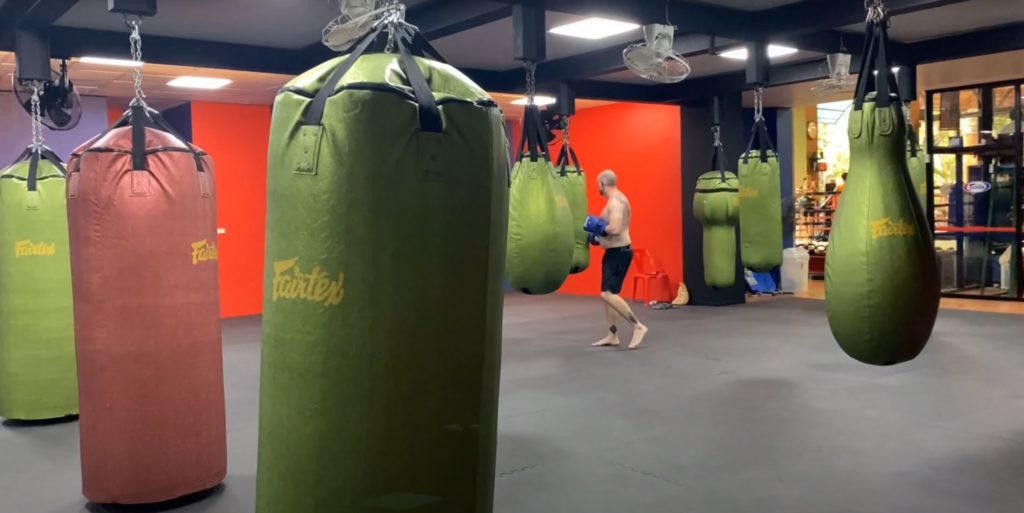
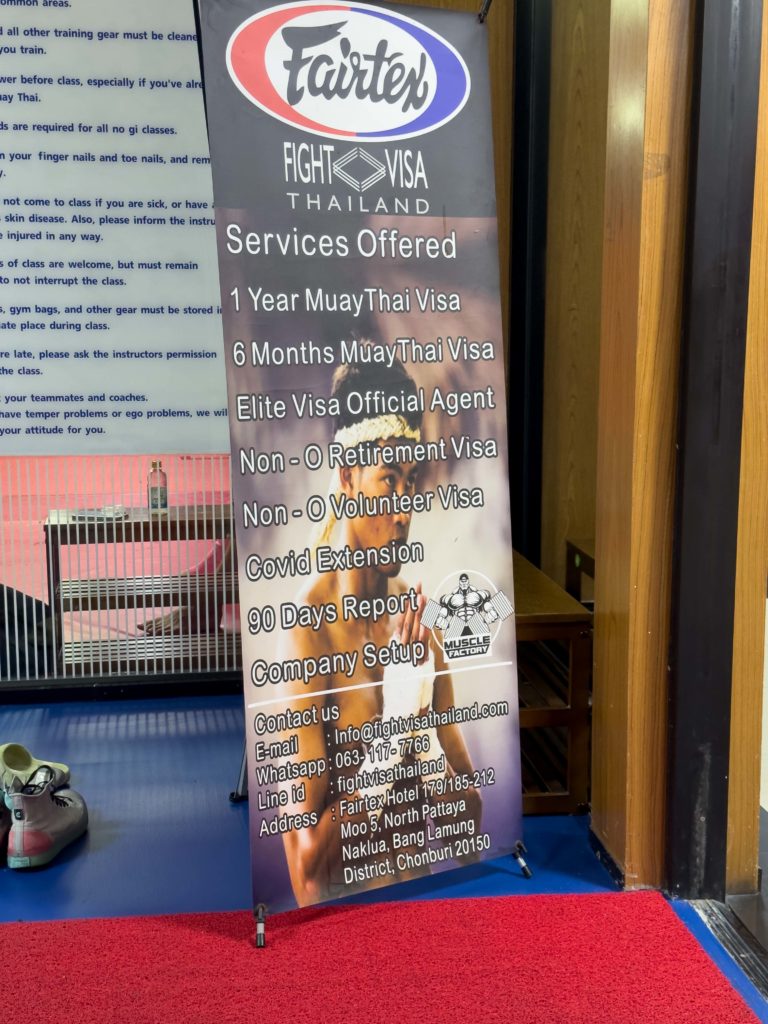

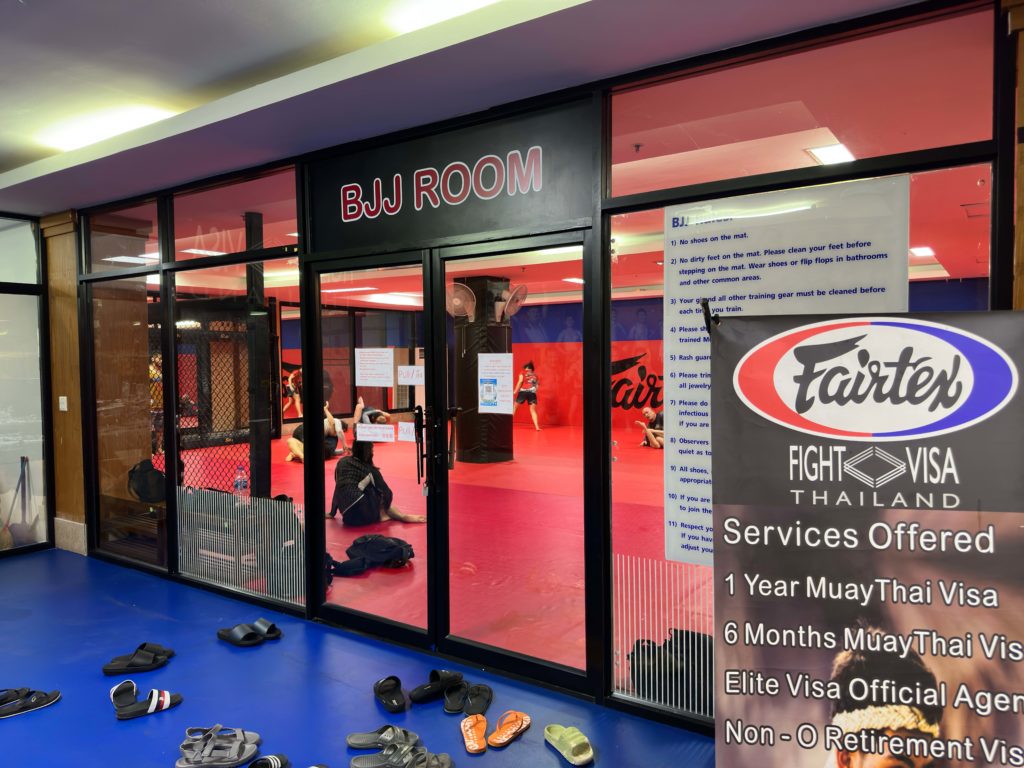
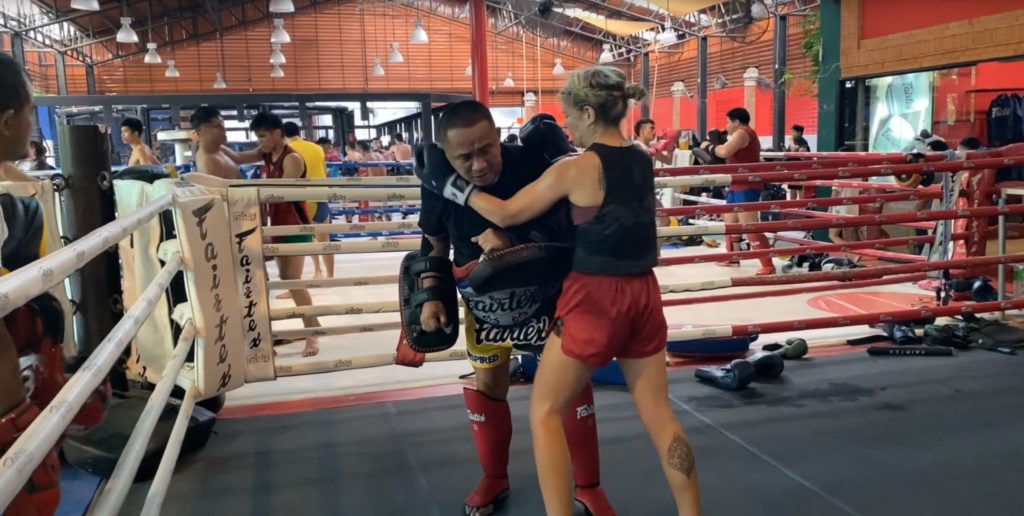
Although we weren’t staying at the Fairtex Hotel, we were still able to walk in and get signed up for Muay Thai and Brazilian Jiu-Jitsu during our trip. Rates were reasonable at 500 – 600 baht ($15.00 – $18.00) per individual Muay Thai session and 350 – 400 baht ($10.00 – $12.00) per individual BJJ session. The more often you train, the cheaper it gets with a monthly unlimited Muay Thai membership costing as little as 13,000 baht ($382.00) and unlimited BJJ at 5,000 baht ($147.00). Unlimited Muay Thai membership allows you to train twice a day, six days a week, with 2 – 4 hour training sessions that include at least five 5-minute rounds of pad work with an experienced trainer. Unlimited BJJ runs two-hours per night, Monday through Friday with an open mat on Saturday. See the full list of current pricing here. After nearly a week in Pattaya, it was time to move on. We packed our gear and booked a vehicle through Nam’s Taxi Services and headed back to Bangkok for the rest of our stay. The two-hour drive went by quickly and we were dropped off in Bangkok, on Soi 11, at the Ambassador Hotel. While slightly more expensive than our previous hotel, the Ambassador was a 4-star facility with convention center, dining, and fitness facilities on site. Best of all we were just 200 yards away from the Nana BTS skytrain station, making public transit across Bangkok fairly accessible to us. On Saturday afternoon, we wanted to watch some Muay Thai, so we headed to the Chatuchak area next to the famous Chatuchak Weekend Market. In the area is the Channel 7HD television studios (map) which films weekly Muay Thai matches in their studio. The matches are free and open to the public, but it’s not really well known by tourists compared to the larger Muay Thai productions at Lumpinee (map) and Rajadamnern (map) Stadiums.


